DeepToSeek
Most enterprise AI programs fail the same way: buy a platform top-down, then watch nobody use it. Mengniu took the opposite route — teach the people who actually do the work to build the tools themselves.
The structure
Mengniu selected roughly 200 frontline staff as "AI pioneers" and asked them to build applications around real job requirements. To date the program has produced 45 "AI digital employees" and 199 candidate efficiency scenarios, spanning R&D, production, supply chain, marketing and corporate functions.
The value is in where the requirements come from. A digital department cannot guess what a ranch veterinarian agonizes over at 6am. A veterinarian can. Hand the tooling to the front line and the requirements stop drifting.
Three measurable cases
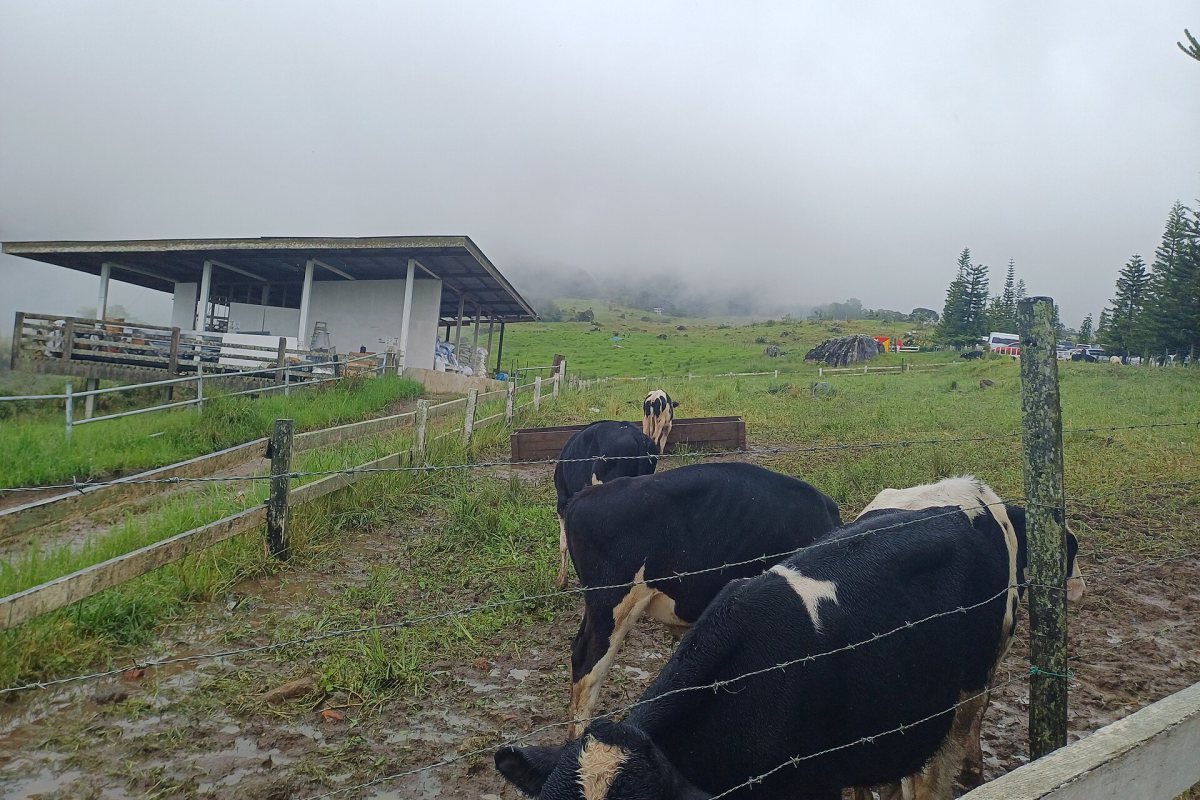
Ranch triage. Single-ranch diagnostic turnaround fell from about 1.5 days to 2 hours. The mechanism is unglamorous: historical cases, symptom descriptions and treatment protocols become a searchable knowledge base, so staff get a reference judgment on site instead of waiting for an expert reply.
Product imagery. Designers built an image-generation pipeline over roughly a hundred rounds of dialogue. Product hero images dropped from minutes to seconds. The gain is not "AI can draw" but that repetitive layout, background swapping and templating became a reusable process.
Supply chain lab. Full-process automated data capture for testing lifted efficiency by close to 25 percent. It sounds dull, but capture quality determines whether any downstream analysis is trustworthy.
Why these three worked
Put them side by side and the pattern is obvious: high frequency, relatively clear rules, verifiable outcomes.
Ranch triage has case outcomes to check against. Product imagery has brand guidelines to validate. Lab capture has a standard procedure to compare with. That combination is what makes an AI output acceptable inside a real workflow.
The attempts that stall are usually the ones with no acceptance criteria — "let AI write our strategy memo" being the classic.
What smaller companies should copy
You do not need 200 people. The logic scales down:
1. List roles, then find tasks repeated three or more times a day that have a right and wrong answer.
2. Start with one person and one task. Prove it, then replicate horizontally.
3. Turn the working process into a template instead of leaving it in one person's head.
4. Accept the project on a hard metric — turnaround, rework rate, headcount covered.
The number worth noticing is 199
That figure says the bottleneck is not a shortage of ideas. It is the engineering capacity to turn an idea into a running process. The competitive gap in enterprise AI is shifting from model capability to process surgery.
Mengniu Runs 45 AI Digital Employees, Cuts Vet Triage to 2 Hours